
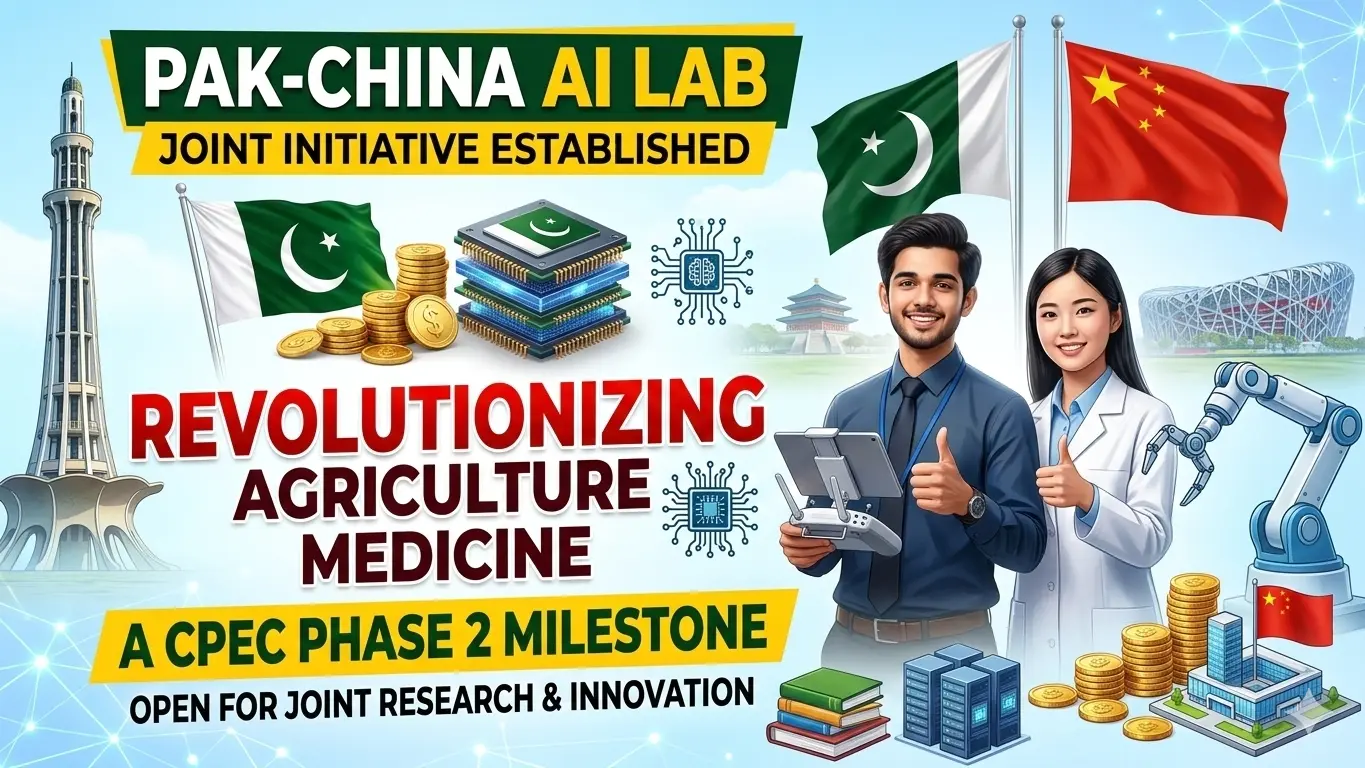
In a landmark move that signals a paradigm shift in regional technological synergy, Pakistan and China have officially announced the establishment of a specialized joint laboratory. This high-tech facility, known as the Pak-China AI Lab, is set to become the cornerstone of bilateral cooperation, focusing specifically on integrating artificial intelligence into the critical sectors of agriculture and medicine. As part of the evolving CPEC Phase 2 framework, this initiative aims to transition the partnership from traditional infrastructure to a knowledge-based, innovation-driven economy.
Table of Contents
The Vision: A Digital Silk Road for Innovation
The announcement, highlighted by Pakistan’s Ambassador to China, Khalil Hashmi, underscores a strategic alignment between the two nations. While previous collaborations focused on roads and energy, the Pak-China AI Lab represents the “Digital Silk Road” in action. By leveraging China’s global leadership in AI—where they hold over 60% of the world’s AI patent grants—Pakistan is positioned to leapfrog decades of traditional developmental hurdles.
This Pak-China technology cooperation is not merely about importing hardware; it is about “teaching how to fish.” The laboratory will serve as a hub for joint research and development, capacity building for local scientists, and the commercialization of AI solutions tailored to the unique demographic and environmental challenges of Pakistan.

Revolutionizing the Fields: AI in Agriculture Pakistan
Agriculture remains the backbone of Pakistan’s economy, contributing nearly 23% to the GDP. However, the sector has long been plagued by low yields and climate vulnerability. The Pak-China AI Lab is designed to address these systemic issues through “Smart Agriculture.”
1. Precision Farming and Yield Mapping
Through the laboratory, advanced computer vision and satellite imagery will be deployed to monitor crop health in real-time. This allows for:
- Targeted Fertilization: AI algorithms can pinpoint exactly which areas of a field need nutrients, reducing input costs by up to 30%.
- Water Management: In a water-stressed country, smart irrigation systems guided by AI can optimize water usage based on soil moisture sensors and weather forecasts.

2. Drones and Intelligent Spraying
A key project already gaining momentum is the use of AI-powered drones. Instead of hazardous manual spraying, these drones use visual recognition to identify pests and diseases, applying pesticides with surgical precision. This not only increases productivity but also protects the health of the farming community.
3. Livestock Breeding and Biotech
The laboratory’s scope extends to the livestock sector, where AI is being used to improve breeding programs. From Himalayan pink salt applications in animal nutrition to AI-driven in vitro fertilization for dairy cattle, the goal is to enhance the quality and quantity of Pakistan’s meat and dairy exports to the global market.
A New Era of Healthcare: AI-Driven Medicine
The second pillar of the Pak-China AI Lab is medicine. This sector is perhaps the most personal for the 255 million citizens of Pakistan, where access to high-quality diagnostic and therapeutic tools is often limited by geography and cost.
Robotic Surgery and Diagnostics
The collaboration has already seen practical success with the introduction of China’s “Toumai” surgical robot at the Pakistan Institute of Medical Sciences (PIMS). The joint laboratory will further this by:
- Developing Diagnostic AI: Creating algorithms that can detect diseases like tuberculosis or various cancers from X-rays and MRIs with higher accuracy than manual review.
- Pharmaceutical Research: Using AI to accelerate drug discovery and the development of biotechnology, making life-saving medicines more affordable.
Telemedicine and Remote Care
By integrating AI with Pakistan’s growing digital infrastructure, the lab aims to empower rural health centers. AI-powered diagnostic tools can allow a local technician to provide specialist-level screening, with results verified by AI models trained on massive datasets from both China and Pakistan.
Economic Impact and CPEC Phase 2
The establishment of the Pak-China AI Lab is a central component of the $4.5 billion investment surge seen in early 2026. During the recent Pakistan-China B2B Agriculture Investment Conference, over 79 MoUs were signed, many of which depend on the technological backbone provided by this joint lab.
Why This Matters for Investors
For businesses, the Pak-China technology cooperation offers a stabilized environment for tech transfer. It provides a legal and academic framework where Chinese tech giants and Pakistani entrepreneurs can collaborate on joint ventures. This is expected to create thousands of high-skilled jobs in data science, drone piloting, and biotech engineering across Pakistan.
“AI is a cross-cutting technology. By partnering with China, we are not just adopting tools; we are building a knowledge-based economy that will serve our future generations.” — Ambassador Khalil Hashmi, March 2026.
Authentic Sources and Further Information
For those looking to engage with these projects or seek official documentation, the following government portals provide real-time updates and application forms for research and investment:
- Ministry of Science and Technology (MoST): https://most.gov.pk/ – For updates on AI policy and laboratory framework.
- Ministry of National Food Security & Research (MNFSR): https://pcaic.mnfsr.gov.pk/ – For information on B2B agriculture MoUs and smart farming initiatives.
- CPEC Official Portal: http://cpec.gov.pk/ – For the broader strategic context of CPEC Phase 2 projects.
- National University of Sciences & Technology (NUST): https://nust.edu.pk/ – For academic collaboration and AI research opportunities.
Conclusion: A Resilient Future
The Pak-China AI Lab is more than just a building; it is a testament to a “Higher than the Himalayas” friendship evolving with the times. By addressing the dual challenges of food security and healthcare through AI in Agriculture Pakistan and advanced medical research, this initiative ensures that the benefits of the Fourth Industrial Revolution reach the doorstep of the common citizen.
As we look toward the remainder of 2026 and beyond, the integration of AI will likely be the deciding factor in Pakistan’s quest for economic resilience and sustainable development.